
Most of us want that lit-from-within glow, but between TikTok trends, expensive serums, and endless “must-haves,” it feels impossible to figure out where to start.
I spent years trying everything (including some total fails—my husband still teases me about my DIY yogurt masks), I know how overwhelming it gets.
A solid skin care routine doesn’t have to drain your wallet or take up your entire morning.
This guide focuses on a practical, affordable skin care routine that covers both face and body. It’s for women who want real results. Let’s break it down together.
What is Your Skin Type?
Before you buy a single product, you need to know your skin type. Otherwise, it’s like wearing shoes two sizes too small and wondering why your feet hurt.
Here’s a quick cheat sheet:
- Oily: Your face looks shiny and you feel like you need to blot by noon.
- Dry: Your skin feels tight, rough, or flaky.
- Combination: Oily in the T-zone (forehead, nose, chin) and dry on the cheeks.
- Sensitive: Reacts easily—gets red, itchy, or stings after using new products.
What’s Your Skin Type?
Your Skin Type!
My husband always says, “Treat your skin type, not your friend’s.” That’s dermatologist code for: don’t copy your favorite influencer without checking your own skin first.
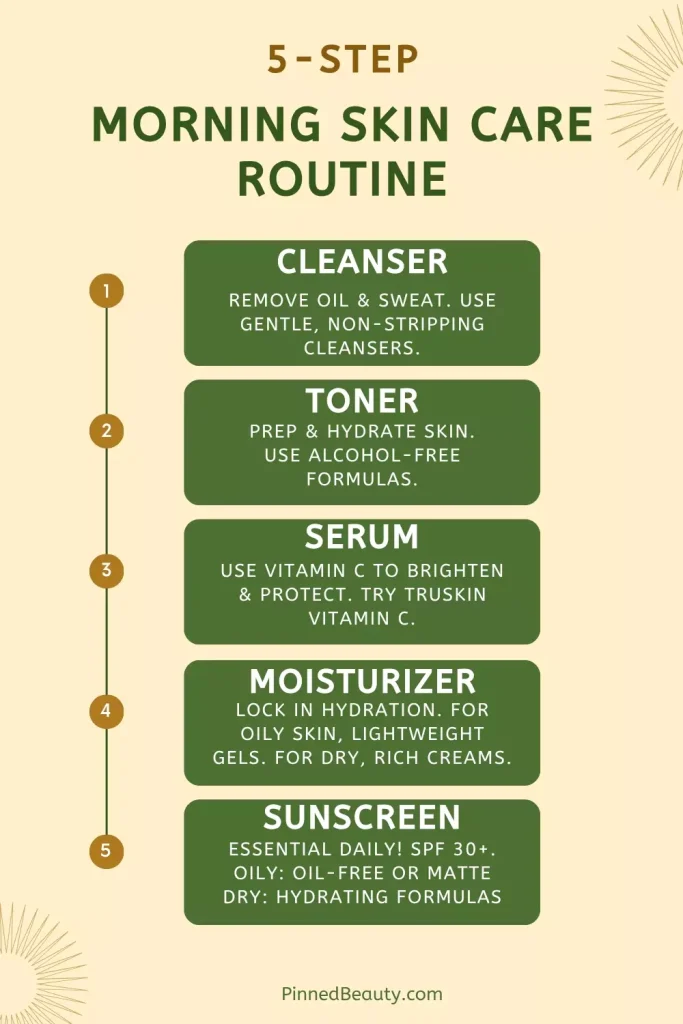
Morning Skin Care Routine (5 Steps)
Step 1: Cleanser
A good cleanser is the foundation of every morning routine. It removes nighttime sweat, oil, and leftover products so your skin starts fresh.
You don’t need anything fancy here—just a gentle cleanser that won’t strip your skin’s natural barrier.
For oily or acne-prone skin, I recommend a foaming or gel-based cleanser, like CeraVe Foaming Facial Cleanser or La Roche-Posay Effaclar Purifying Foaming Gel. These help control excess oil without leaving you dry.
For dry or sensitive skin, a creamy or hydrating cleanser is better—something like CeraVe Hydrating Cleanser or Vanicream Gentle Facial Cleanser. These clean without making your face feel tight.
Step 2: Toner
A toner isn’t strictly necessary, but it’s a great step to prep your skin for serums and moisturizers. Think of it like a primer for your skincare.
Choose an alcohol-free formula to avoid irritation. Toners can help rebalance pH and add a layer of hydration.
Ingredients like rose water, witch hazel (alcohol-free), or hyaluronic acid are great.
A budget-friendly pick is Thayers Alcohol-Free Witch Hazel Toner. If you’re looking for extra hydration, try the Hada Labo Gokujyun Lotion (a cult favorite in Japan, but affordable).
Step 3: Serum
Morning is the perfect time for antioxidants—especially vitamin C. It fights free radicals (those pesky molecules that speed up aging and cause dullness) and helps brighten and even your skin tone.
A vitamin C serum also boosts your sunscreen’s effectiveness. Win-win.
Start slow if you have sensitive skin—some people need to build up tolerance. Try TruSkin Vitamin C Serum or La Roche-Posay Pure Vitamin C Face Serum.
Step 4: Moisturizer
Even if your skin is oily, you still need moisturizer. Skipping it can actually make your skin produce more oil to compensate.
Lightweight, gel-based moisturizers are great for oily and combination skin. Neutrogena Hydro Boost Water Gel is my top choice—it feels like a cool drink of water for your face.
For dry skin, thicker creams like CeraVe Moisturizing Cream or Vanicream Moisturizing Cream can help seal in hydration and protect the skin barrier.
Combination skin? Feel free to use different products on different areas. You’re not weird—you’re smart.
Step 5: Sunscreen
If you take nothing else from this guide, please take this: wear sunscreen. Every. Single. Day. Even when it’s cloudy. Even when you’re staying inside.
UV rays are the number one cause of premature aging, hyperpigmentation, and skin cancer. Sunscreen is your best anti-aging investment.
Choose a broad-spectrum sunscreen with SPF 30 or higher.
For oily skin, look for oil-free or matte formulas. For dry skin, a moisturizing sunscreen is ideal.
Affordable picks: Neutrogena Ultra Sheer Dry-Touch SPF 55, La Roche-Posay Anthelios Melt-in Milk SPF 100, or CeraVe Hydrating Mineral Sunscreen.
My husband’s favorite line: “If you skip sunscreen, you’re basically undoing every other good thing you do for your skin.” He’s dramatic—but he’s right.
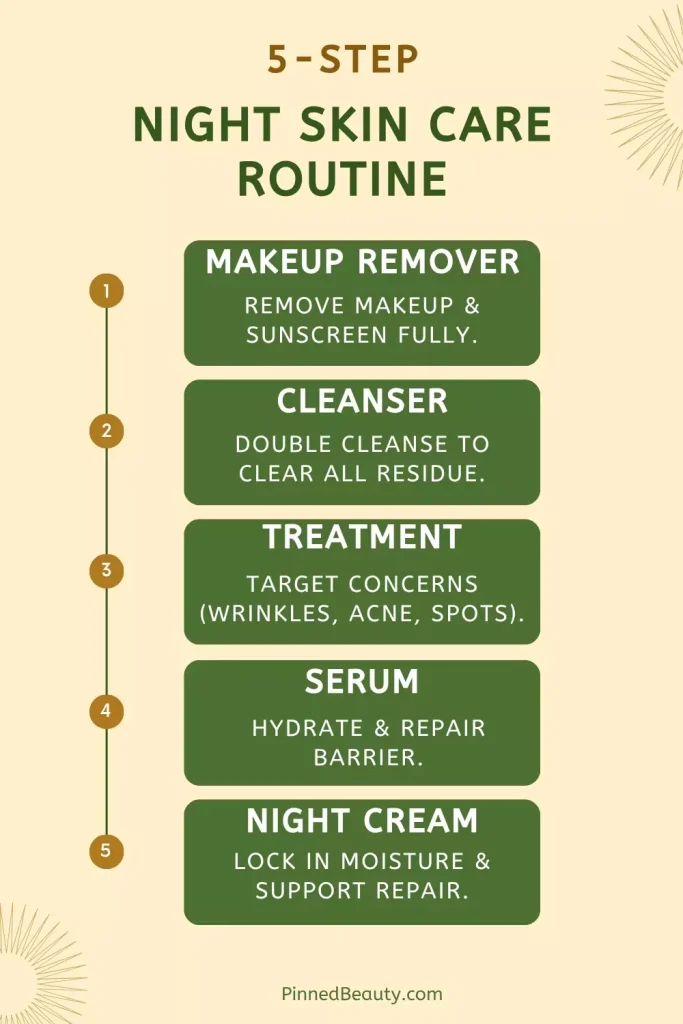
Night Skin Care Routine (5 Steps)
Step 1: Makeup remover
Even if you’re only wearing a tinted moisturizer, sunscreen, or a little concealer, you still need to remove it properly. A quick splash of water doesn’t cut it.
Micellar water (like Garnier Micellar Water) is a gentle, effective option that won’t irritate or clog pores.
If you wear heavy or waterproof makeup, consider an oil-based balm or cleansing oil first (e.g., Heimish All Clean Balm or DHC Deep Cleansing Oil).
Double cleansing helps thoroughly remove makeup, sunscreen, and pollution residue from the day.
Step 2: Cleanser
Follow up with your regular facial cleanser to get rid of any leftover oil or residue from your makeup remover.
My husband always tells his patients that a good double cleanse at night is like brushing and flossing—it’s not negotiable if you want healthy skin long-term.
If your skin feels too dry or tight after this step, you’re over-cleansing or using the wrong product.
Step 3: Treatment (Retinol or other actives)
This is where you address specific concerns, like fine lines, acne, or dark spots. Retinol is one of the most studied and effective ingredients for preventing wrinkles and promoting collagen production.
Start with a low concentration (0.2% to 0.3%) and use it only 2–3 times per week to allow your skin to adjust. Overdoing it leads to redness, peeling, and irritation.
If you have sensitive skin or are new to retinol, buffer it by applying moisturizer first.
Good beginner-friendly options: The Ordinary Retinol 0.2% in Squalane or Differin Gel (adapalene), which is technically a retinoid but also a great over-the-counter option.
Other night treatments:
- Niacinamide (for oil control and redness)
- AHA/BHA exfoliants (for smoother texture, but only 1–2 times per week)
Step 4: Serum
After your treatment step (on nights when you skip retinol), focus on hydration and barrier repair. Hyaluronic acid serums draw moisture into the skin and make it look plumper and more supple by morning.
Try The Ordinary Hyaluronic Acid 2% + B5 or Vichy Mineral 89.
If you want to boost glow, you can also consider serums with peptides or ceramides for extra repair.
Step 5: Night cream
At night, your skin goes into repair mode. Night creams tend to be richer to support this natural regeneration.
Look for ingredients like ceramides, peptides, or niacinamide. Avoid heavy fragrance if you’re sensitive.
Budget-friendly and effective options include CeraVe PM Facial Moisturizing Lotion, Vanicream Moisturizing Cream, or Neutrogena Hydro Boost Gel Cream (great for oily skin).
If your skin is very dry or irritated, consider adding an occlusive layer, like a thin smear of Vaseline or Aquaphor over your moisturizer (a method known as “slugging”). My husband thought I was nuts when I started slugging—then he saw my glow the next morning and had to eat his words.
Body Skin Care Basics
| Step | What to do | Product Suggestion |
|---|---|---|
| Exfoliate | 1–2 times per week to remove dead skin | Tree Hut Sugar Scrub |
| Moisturize | Daily after shower, locks in moisture | CeraVe Daily Moisturizing Lotion |
| Sunscreen | Every morning on exposed areas | Neutrogena Hydro Boost Water Gel SPF 30 |
Your body deserves love too! Don’t overthink it—keep it as simple as your face routine.
Tips for Success
Patch-test everything, even if your favorite influencer swears it’s “gentle.” Skin needs 4–6 weeks to show real results, so don’t jump ship too soon.
Hydration isn’t just topical—drink plenty of water, and load up on skin-friendly foods like avocados, nuts, and berries.
Good skin is 50% routine and 50% lifestyle. Don’t ignore the inside while obsessing over serums.
Conclusion
Building a consistent skin care routine doesn’t have to be overwhelming or expensive. Start simple, stick to the basics, and give your skin time to respond.
Remember: no product is magic overnight, and consistency is your real superpower.
Got questions? Drop them below or share your favorite affordable finds—I’d love to hear what works for you. And if my dermatologist husband rolls his eyes at my next experiment, I promise to let you know.
Ready to glow? Let’s do this together.