

If you’ve ever stepped out of the shower only to be greeted by a halo of frizz—or watched your hair puff up the moment humidity hits—you’re not alone.
Frizz happens when the outer layer of your hair (the cuticle) lifts, allowing moisture to rush in or escape.
The good news is that frizz isn’t permanent.
With a consistent routine that protects, hydrates, and smooths, you can finally say goodbye to flyaways and hello to soft, sleek strands.
Did Your Frizzy Hair Stop With This Routine?
7-Step Routine That Works
This 7-step no-frizz routine is designed to take you from shower to sleep with hair that stays smooth in any weather.
Step 1: Pre-Wash Love
Think of a pre-wash treatment as primer for your hair.
Applying a light oil or conditioner before shampooing cushions your strands against friction and helps prevent moisture loss.
It’s optional, but especially useful for dry, damaged, or curly textures that crave extra protection.
Step 2: Cleanse Smart
Hot water may feel soothing, but it can strip the natural oils your hair needs and raise the cuticle, making frizz worse.
Switch to lukewarm water and use a gentle, sulfate-free shampoo that cleanses without over-drying. Most people find washing two to three times a week keeps their scalp fresh while letting the hair maintain balance.

Pro tips while cleansing:
- Wash with lukewarm water, not hot.
- Choose sulfate-free shampoo.
- Don’t overwash—2–3 times per week is plenty for most.
Step 3: Deep Condition with Care
Conditioner isn’t just a nice extra—it’s the foundation of frizz control. Work it through your strands and detangle gently while the hair is slippery.
For even better results, follow up with a leave-in conditioner after rinsing. This seals in hydration and gives your hair a smooth base before styling.
Step 4: Dry Gently
Traditional terry towels are notorious for roughing up the hair cuticle. Instead, blot your hair with a microfiber towel or a soft cotton T-shirt.
If you have waves or curls, try the “plopping” method: wrapping your hair in a T-shirt and letting it rest at the crown of your head for 10 to 20 minutes.
This technique reduces frizz and enhances natural curl definition without heat.
Step 5: Seal and Style While Wet
The best time to apply anti-frizz products is when your hair is still damp. Use a lightweight serum, cream, or leave-in to lock in moisture and smooth the cuticle before air-drying or styling.
- Curly hair types: Layer a styling gel over your leave-in for definition and long-lasting frizz control.
- Straight or fine hair: Stick with a lightweight serum or spray that won’t weigh it down.
Step 6: Heat with Care
Heat styling isn’t off-limits, but it must be done wisely. Always apply a heat protectant before blow-drying, curling, or straightening.
When possible, use a diffuser on low to medium heat rather than blasting your hair with high heat.
Limiting hot tools helps your hair retain moisture and keeps the cuticle smooth.
Step 7: Overnight Armor
Even the best daytime routine can be undone while you sleep. Tossing and turning against a cotton pillowcase creates friction that leads to morning frizz.
Switch to a silk or satin pillowcase, or wear a silk bonnet to keep strands smooth overnight.
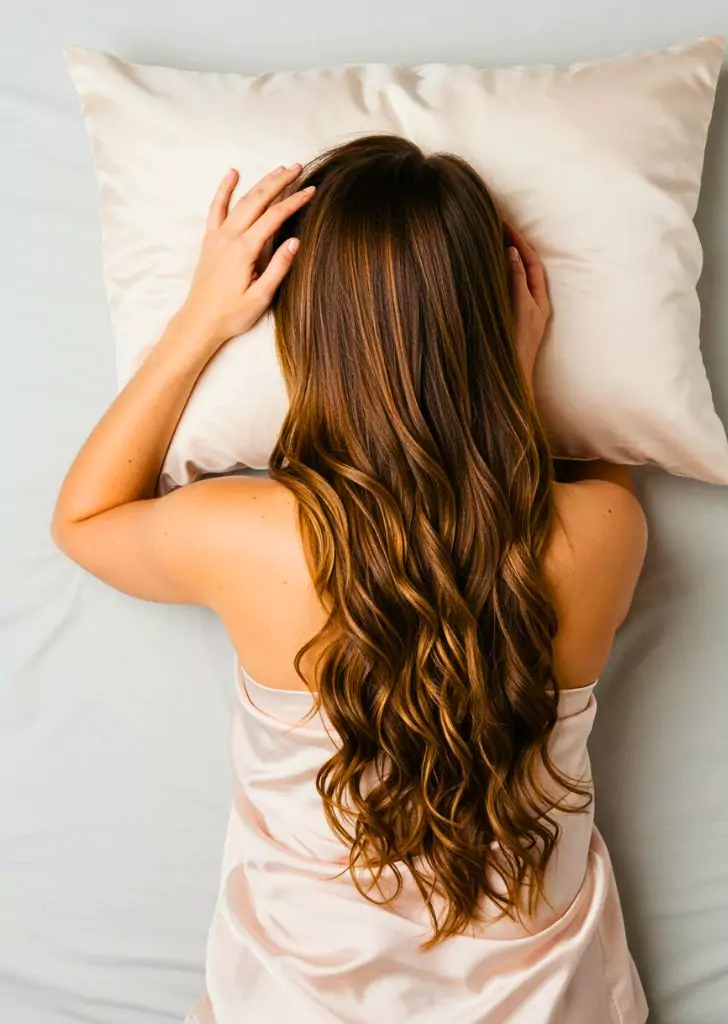
For added protection:
- Curly/wavy hair: gather into a loose “pineapple” on top of your head.
- Straight hair: loosely braid before bed to reduce friction.
- Use a tiny drop of oil on your ends or a spoolie with product to tame baby hairs.
Why This Routine Works
Each step targets the root causes of frizz. Gentle cleansing and conditioning keep the cuticle hydrated. Microfiber drying and silk pillowcases reduce friction.
Applying products while hair is wet locks in moisture.
Together, these habits flatten the cuticle and protect it against humidity and dryness—the two main culprits behind frizz.
Quick Fixes for On-the-Go
Sometimes, frizz sneaks up anyway. For those moments, keep these tricks handy:
- A smoothing stick or travel-sized serum for flyaways.
- A clean toothbrush with hairspray to tame baby hairs.
- A drop of oil rubbed between your palms and smoothed over ends for shine.
FAQ
Why is my hair frizzy right after washing?
It’s usually a combination of hot water, harsh shampoo, or skipping leave-in conditioner. Cooling the water, switching to a gentler cleanser, and applying a lightweight product while wet often solve this.
Is glycerin good or bad for frizz?
It depends on the weather. Glycerin draws water into the hair, which is great in dry climates. In very humid conditions, though, it can pull in too much moisture and cause puffiness. Pairing glycerin with a sealing product keeps balance.
How often should I wash my hair?
Most people do best with two to three washes a week. If you wash more often, be sure to use sulfate-free cleansers and add extra hydration.
Wrap-Up
Frizz doesn’t have to be your everyday battle. By making small, consistent changes—like swapping towels, conditioning with care, and protecting your hair overnight—you’ll notice softer, smoother strands that behave even in humidity.
Save this 7-step starter kit for your next wash day and turn the fight against frizz into a routine that finally works.